

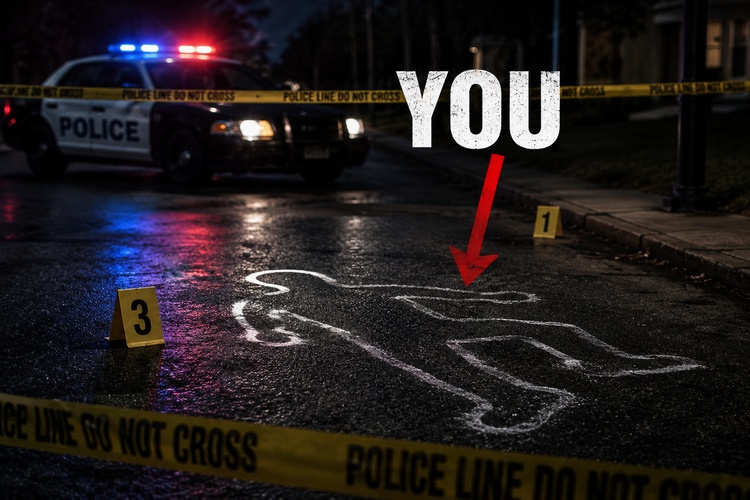
As Vermont lawmakers continue debating immigration enforcement, public safety, bail reform, school policy, and state authority, a deeper constitutional question increasingly sits underneath the arguments:
What legal obligation does government actually owe individual citizens when foreseeable harm occurs?
For many Vermonters, the answer seems obvious.
Government exists to:
- maintain order,
- provide public safety,
- suppress violence,
- and protect citizens from harm.
The U.S. Constitution itself states among the purposes of government are to “insure domestic Tranquility” and “provide for the common defence.”
State governments justify taxation, policing authority, criminal law, and regulation largely through the same public-safety framework.
Yet American courts have repeatedly held something many citizens do not realize:
Government generally does not owe an enforceable individualized duty to protect specific people (you) from third-party violence.
The Doctrine Most Citizens Never Hear About
The legal principle is often referred to as the “public duty doctrine.”
In simple terms:
- government owes duties to the public generally,
- not necessarily to any particular individual citizen.
That distinction has repeatedly shielded governments from liability even in tragic cases involving murder, abuse, school violence, and repeat offenders.
In DeShaney v. Winnebago County, the U.S. Supreme Court ruled that the Constitution’s Due Process Clause does not generally require the state to protect individuals from private acts of violence.
The case involved a severely abused child despite repeated warnings to social services.
The Court concluded:
“The Clause is phrased as a limitation on the State’s power to act, not as a guarantee of certain minimal levels of safety and security.”
Years later, in Town of Castle Rock v. Gonzales, the Supreme Court again ruled against a plaintiff after police failed to enforce a restraining order before the murder of three children.
The rulings shocked many Americans because they conflicted with the public assumption that government and police possess a direct legal duty to protect citizens from foreseeable harm.
Schools And The Assumption Parents Make
That disconnect becomes even more striking in schools.
Vermont — like every state — compels school attendance through law.
Parents are legally required to send children into state-regulated educational environments.
The public assumption is straightforward:
if the state compels attendance, surely the state is legally responsible for protecting children there.
But legally, the answer is often far narrower than parents realize.
Schools and governments have repeatedly avoided broad liability in school shootings, assaults, and other acts of violence absent unusually extreme negligence, statutory violations, or highly specific custodial circumstances.
In practice, courts frequently distinguish between:
- a general governmental obligation to provide schools and public safety,
and - an enforceable individualized duty to protect a specific student from third-party harm.
That distinction is not widely understood outside legal circles.
The Dorset Street Question
The issue becomes even more complicated when government policies themselves may alter public-risk exposure.
A recent immigration-enforcement incident in South Burlington illustrates the tension.
Federal immigration agents attempted to detain an unlawfully present individual who had previously been charged with driving while intoxicated in Vermont. During the attempted apprehension, the suspect allegedly fled through public areas near school and commuter traffic.
Critics argued the enforcement action itself created danger.
Others argued the more important public-safety question came earlier:
Why was the individual still in the community after a prior DWI-related offense?
The case became even more controversial after subsequent reporting revealed the suspect later failed to appear for a scheduled court hearing. According to court reporting, Judge Alison Arms then issued a “cite and release” order, meaning that if the individual later came into contact with law enforcement, officers would issue a citation directing him to appear in court on the next business day rather than detaining him.
The larger legal question is difficult but unavoidable:
If state policies limiting federal cooperation, detention, or enforcement discretion contributed to circumstances that later produced a dangerous confrontation, what responsibility does the state bear if an innocent bystander had been injured or killed?
Under current doctrine, likely very little.
Courts would almost certainly examine:
- sovereign immunity,
- discretionary authority,
- proximate cause,
- and whether government owed a specific enforceable duty to a particular victim.
In most cases, the answer would likely remain no.
The Same Debate Exists In Bail Reform
The same structural issue appears in bail reform and repeat-offender policy debates.
Governments may:
- reduce detention,
- lower bail thresholds,
- release repeat offenders,
- narrow enforcement authority,
- or limit cooperation with federal agencies.
If released individuals later commit violent crimes, victims often discover the state itself bears limited individualized liability despite having helped shape the policy environment that preceded the harm.
That disconnect increasingly frustrates citizens who believe government is simultaneously:
- centralizing authority,
- restricting self-help,
- regulating public safety,
- and reducing enforcement tools,
while remaining largely insulated from accountability when predictable harms occur.
When Government Chooses To Create Liability
At the same time, Vermont lawmakers have demonstrated they know how to create enforceable duties when they choose to.
Under Vermont’s Global Warming Solutions Act, citizens and organizations may sue the state if greenhouse-gas reduction requirements are not met.
In other words:
the Legislature created enforceable legal accountability tied to climate-policy outcomes.
That contrast has become difficult for some Vermonters to ignore.
The state may possess limited enforceable duty when citizens suffer foreseeable harm from violent offenders, repeat criminals, or public-safety policy failures.
But the state can still create enforceable liability regarding emissions targets and climate benchmarks when lawmakers choose to do so.
The Underlying Question
At the center of the debate is a broader civic question many Americans never realize exists until they encounter the legal system directly:
If government:
- compels school attendance,
- monopolizes lawful force,
- regulates self-defense,
- shapes public-safety policy,
- limits enforcement cooperation,
- and claims authority over public order,
what enforceable duty does it actually owe individual citizens in return?
That question is becoming increasingly difficult to avoid as Vermont continues debating immigration policy, school safety, public risk, and the limits of governmental responsibility.
Comments