

( Editor’s note: Readers are strongly encouraged to take the time to watch the committee meeting. This article barely touches the surface. )
A March 19 joint hearing of the Vermont House and Senate Judiciary Committees on the March 11 ICE operation in South Burlington quickly drifted away from a basic question: what actually caused the incident to spiral.
Over nearly two hours, legislators pressed law enforcement on masks, use-of-force hypotheticals, and whether state police should intervene against federal agents. What received far less direct attention was the sequence of events that led to the confrontation in the first place.
That sequence is not especially complicated.
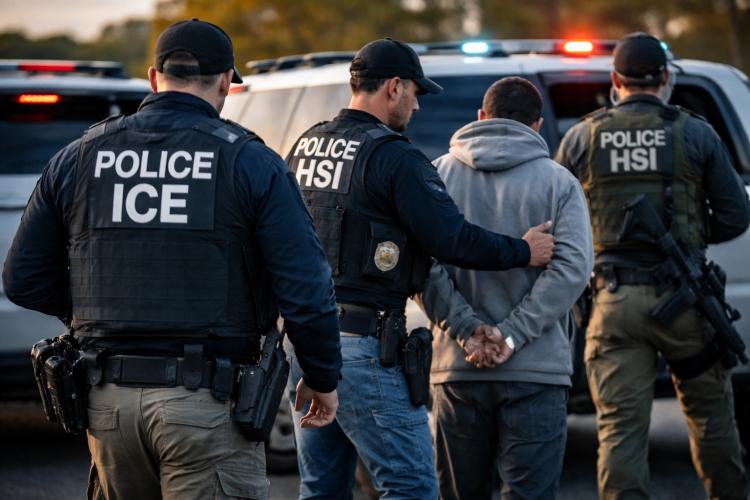
Federal agents attempted to detain an individual. The suspect fled, triggering a vehicle pursuit, collisions, and ultimately a barricaded situation inside a residence near Dorset Street. At that point, federal authorities sought and obtained a criminal warrant.
Then the situation escalated again.
An alert circulated, and a large crowd assembled at the scene. Testimony from multiple agencies described officers being outnumbered, physically obstructed, and in some cases assaulted. Individuals surrounded vehicles, blocked movement, and pressed into the operational area as agents attempted to execute the warrant.
That is the moment where the incident became dangerous.
🍁 Make a One-Time Contribution — Stand Up for Accountability in Vermont 🍁
Protest vs. Interference
Throughout the hearing, legislators repeatedly referred to “protesters” and “First Amendment activity.” Law enforcement, more cautiously, described a split between peaceful individuals and others whose actions crossed into obstruction and assault.
That distinction matters.
Standing on a sidewalk, holding a sign, or voicing opposition is protected speech. Physically blocking officers, surrounding vehicles, or preventing the execution of a lawful warrant is not.
By the time force was used on March 11, officers described a situation where they had to physically move “non-compliant individuals” to create space between federal agents and the crowd.
Despite those descriptions, enforcement against crowd interference was limited. Only a small number of individuals were cited or arrested, even as testimony referenced assaults, thrown objects, and damaged vehicles.
That imbalance—between described behavior and actual enforcement—was not meaningfully examined during the hearing.
The Upstream Failure
Another largely unaddressed issue sits further back in the timeline.
According to federal prosecutors, the individual targeted on March 11 had been arrested in Middlebury in January and charged with drunk driving. Federal authorities say they became aware of his presence in the United States following that arrest.
In other words, this was not an unknown individual suddenly appearing on Dorset Street. He had already passed through Vermont’s criminal justice system.
Because Vermont law enforcement operates under policies that limit cooperation with federal immigration enforcement, that earlier contact did not result in a coordinated transfer of custody. Instead, enforcement was deferred.
When it resumed, it did so in the least controlled environment possible: a public setting, with an unpredictable suspect, and eventually, a large crowd.
The hearing did not directly grapple with whether that policy separation contributed to the outcome.
Crowd Control Failure, Not “Separation”
State and local officials repeatedly described their role as maintaining “separation” and managing crowd control. But their own testimony undercuts that framing.
At one point, local command advised federal agents to abandon a vehicle surrounded by the crowd and retrieve it later with a tow truck, with assurances that police would help clear a path for them to exit safely.
That detail is telling.
It demonstrates that the scene was not a controlled protest environment. It was a situation where law enforcement vehicles were surrounded to the point that standard movement was no longer possible without coordinated extraction.
In other words, officers were not simply standing between two groups. They were dealing with a crowd that had already moved into the operational space and was physically constraining law enforcement.
Under those conditions, the later use of flashbangs and chemical agents did not occur in a vacuum. Testimony established that those tools were deployed as federal agents attempted to recover a vehicle and disperse individuals who had surrounded it and refused to clear the area.
The hearing, however, often treated those tactics as isolated decisions rather than responses to a crowd that had already breached the boundary between protest and interference.
A Disconnected Conversation
Perhaps the most striking feature of the hearing was the disconnect between testimony and questioning.
Law enforcement described:
- a suspect who escalated a stop into a dangerous situation
- a crowd that physically constrained officers and vehicles
- a rapidly deteriorating operational environment
Legislators focused on:
- whether federal force was excessive
- whether state police should intervene against federal agents
- whether policy language was properly interpreted
Those are not irrelevant questions. But they are downstream.
What remained largely unexamined was the causal chain:
- a suspect fleeing and committing additional offenses
- a large crowd physically interfering with a lawful operation
- a constrained environment that increased the likelihood of force
Without that chain, the discussion becomes unmoored from the conditions officers on the ground were actually facing.
The Outcome
By the end of the hearing, officials emphasized that no deaths occurred and serious injuries were avoided. They credited coordination between agencies and the presence of local and state police with preventing a worse outcome.
That may ultimately be the most important fact.
But it sits alongside another one:
The conditions described are precisely the kind of conditions that lead to catastrophic outcomes.
That they did not, this time, appears to have been the result of restraint, luck, or both.
The Questions Left Unanswered
For all the testimony and debate, the hearing left the most consequential questions largely untouched.
First: what is Vermont’s position when a crowd moves beyond protest and into direct interference with law enforcement?
Testimony described officers being surrounded, vehicles blocked, and individuals refusing to clear operational space. Yet the hearing stopped short of clearly defining where protected protest ends and unlawful obstruction begins—or what the state intends to do when that line is crossed. If a large enough crowd can physically constrain officers during a lawful operation, is that a failure of enforcement, or an accepted outcome?
Second: does Vermont want cooperation with federal law enforcement, or not?
State officials emphasized both a lack of prior communication from federal agencies and a policy framework that limits coordination with them. Those two positions sit uneasily together. If state policy and political leadership signal distance or distrust, then limited federal communication is not surprising—it is a foreseeable result. The hearing did not reconcile that contradiction.
Third: did Vermont’s own policies contribute to the conditions that led to March 11?
The individual at the center of the incident had prior contact with Vermont law enforcement earlier in the year. Yet the March 11 encounter occurred not in a controlled custodial setting, but as a public enforcement action that escalated into a pursuit, a barricaded residence, and a mass crowd response. The hearing did not directly examine whether the state’s approach to non-cooperation helped shift enforcement into a more volatile environment.
Fourth: at what point does an incident stop being primarily about immigration and become a straightforward public safety issue?
By the accounts given, the situation involved a fleeing suspect, vehicle collisions, and risks to the public near a school. Yet much of the discussion remained focused on immigration policy and federal conduct, rather than on how state and local authorities respond when a suspect’s actions create immediate danger regardless of immigration status.
Finally: what level of disorder is Vermont prepared to tolerate before reasserting control?
Officials described efforts to maintain order and prevent escalation. But the conditions described—crowds pressing into an active law enforcement scene and limiting movement—raise a more basic question. If those conditions persist, what is the state’s threshold for restoring control, and how consistently is that threshold applied?
Dave Soulia | FYIVT
You can find FYIVT on YouTube | X(Twitter) | Facebook | Instagram
#fyivt #Vermont #PublicSafety #ImmigrationPolicy
Support Us for as Little as $5 – Get In The Fight!!
Make a Big Impact with $25/month—Become a Premium Supporter!
Join the Top Tier of Supporters with $50/month—Become a SUPER Supporter!


 Subscribe to RSS




Leave a Reply to Vincent C HunterCancel reply