

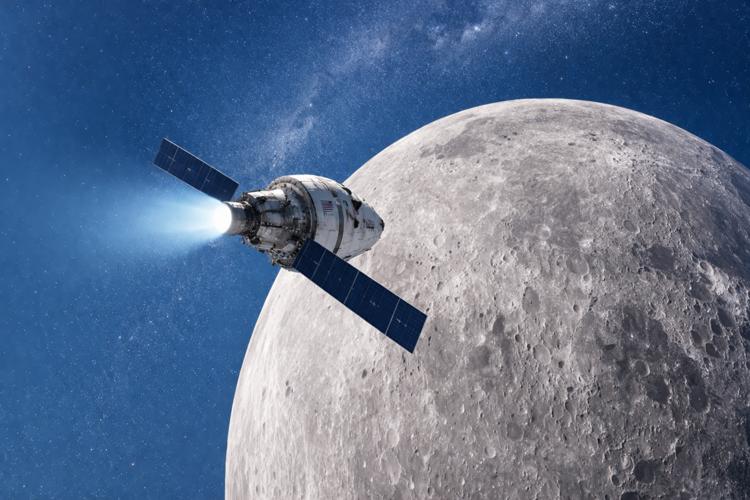
NASA’s Artemis II countdown is running. Wednesday’s launch would send humans toward the Moon for the first time in more than 50 years.
The clock is ticking at Kennedy Space Center. As of Monday afternoon, the countdown for NASA’s Artemis II mission is officially underway, with liftoff targeted for 6:24 p.m. EDT this Wednesday, April 1 — a date that, under any other circumstances, would invite skepticism.
If all goes according to plan, four astronauts will climb aboard an Orion spacecraft perched atop the most powerful operational rocket on Earth and begin a 10-day journey around the Moon and back. It will be the first time humans have traveled beyond low Earth orbit since the final Apollo mission touched down in December 1972. Gene Cernan’s bootprints in the lunar dust have been waiting 54 years for company.
🍁 Make a One-Time Contribution — Stand Up for Accountability in Vermont 🍁
The Crew and the Capsule
Commander Reid Wiseman leads the mission, with pilot Victor Glover and mission specialist Christina Koch rounding out the NASA contingent. Canadian Space Agency astronaut Jeremy Hansen rounds out the four-person crew — becoming the first non-American to travel to the vicinity of the Moon.
They’ll be flying aboard Orion, a capsule named Integrity for this flight. The spacecraft is considerably more sophisticated than the Apollo command modules that made the same journey half a century ago, with life support systems being tested with a crew for the first time. The ride up will be courtesy of the Space Launch System, a 322-foot rocket that produces more thrust at liftoff than the Saturn V did — the same pad, Launch Complex 39B, that sent Apollo astronauts on their way.
Weather forecasters with the U.S. Space Force’s Space Launch Delta 45 are calling for an 80% chance of favorable conditions Wednesday, with cloud cover and high winds the primary concerns. NASA has a six-day launch window extending through April 6 if needed.
What the Mission Actually Does
Artemis II is not a lunar landing. It’s a test flight — a rigorous shakedown of hardware and crew systems in deep space before NASA commits to putting boots on the surface. The mission follows a free-return trajectory, meaning Orion will use the Moon’s gravity to loop around and send the spacecraft back toward Earth without needing to fire its engine for a return burn.
About 25 hours after launch, assuming Orion’s systems check out, the crew will execute a critical “trans-lunar injection” burn lasting just over six minutes. That engine firing adds roughly 900 mph to their velocity — enough to escape Earth’s orbit and begin a four-day coast to the Moon.
Five days into the mission, the crew will make their closest pass. Assuming an April 1 launch, they’ll swing approximately 4,700 miles beyond the far side — beating the distance record set by the Apollo 13 crew in 1970 by about 4,000 miles. That’s the farthest any human being has ever been from Earth, and they’ll beat it by a comfortable margin.
They’ll also glimpse something no human eyes have ever seen directly: portions of the lunar far side in sunlight. With the April 1 launch geometry, about 21% of the far side will be illuminated when Orion swings past. Satellite imagery exists, but Koch put it plainly during a preflight briefing — there are places on the far side that have simply never been seen by people.
Reentry and Splashdown
The return is not a gentle affair. Pulled by Earth’s gravity after the lunar swing, Orion will hit the upper atmosphere at roughly 25,000 miles per hour — about seven miles per second. The 16.5-foot heat shield will face temperatures approaching 5,000 degrees Fahrenheit, and radio blackout will cut off communications for around five minutes. If the engineering holds, splashdown in the Pacific Ocean is scheduled for April 10.
The heat shield drew scrutiny after Artemis I’s 2022 reentry revealed unexpected erosion. NASA conducted extensive analysis, concluded the design would protect the crew under conditions exceeding what Artemis II will encounter, and approved the flight. Design changes are planned for future missions.
What Comes Next
Artemis II is the proving ground, not the destination. NASA’s revised roadmap calls for a 2027 mission — Artemis III — to test docking with commercial landers being built by SpaceX and Blue Origin in Earth orbit. A lunar surface landing is targeted no earlier than 2028, with the goal of establishing a permanent presence near the south pole thereafter.
For now, though, the immediate mission is simpler and, in its own way, more profound. Four people are about to go farther from home than any human in more than half a century. The countdown is running. The weather looks good.
Wednesday evening, with any luck, the sky over Florida lights up again.
Dave Soulia | FYIVT
You can find FYIVT on YouTube | X(Twitter) | Facebook | Instagram
#fyivt #ArtemisII #NASAMoon #BackToTheMoon
Support Us for as Little as $5 – Get In The Fight!!
Make a Big Impact with $25/month—Become a Premium Supporter!
Join the Top Tier of Supporters with $50/month—Become a SUPER Supporter!


 Subscribe to RSS





Leave a Reply