

Vermont’s congressional delegation has sharply criticized the recent U.S. military strikes against Iran. Sen. Bernie Sanders, Sen. Peter Welch, and Rep. Becca Balint have all argued that the action risks another prolonged Middle Eastern conflict and should not have occurred without explicit congressional authorization.
Sanders called the operation an “illegal and unconstitutional war.” Welch warned that the decision could place American troops in danger and deepen instability in the region. Balint similarly argued that the president should have sought authorization from Congress before initiating hostilities.
Their concerns center on process and escalation. But any discussion of U.S. policy toward Iran also sits alongside a long historical record of attacks, hostage crises, proxy warfare, and assassination plots tied to the Iranian government or organizations it supports.
Looking at that record does not answer whether military action is the right response. It does, however, complicate the claim that the current confrontation exists primarily because the United States is acting on behalf of Israel rather than its own interests.
🍁 Make a One-Time Contribution — Stand Up for Accountability in Vermont 🍁
A Timeline of Iranian Actions Affecting Americans
1979–1981 – U.S. Embassy Hostage Crisis
Following the Iranian revolution, militants seized the U.S. Embassy in Tehran and held 52 Americans hostage for 444 days. The crisis defined U.S.–Iran relations for decades and remains one of the most significant diplomatic confrontations in modern American history.
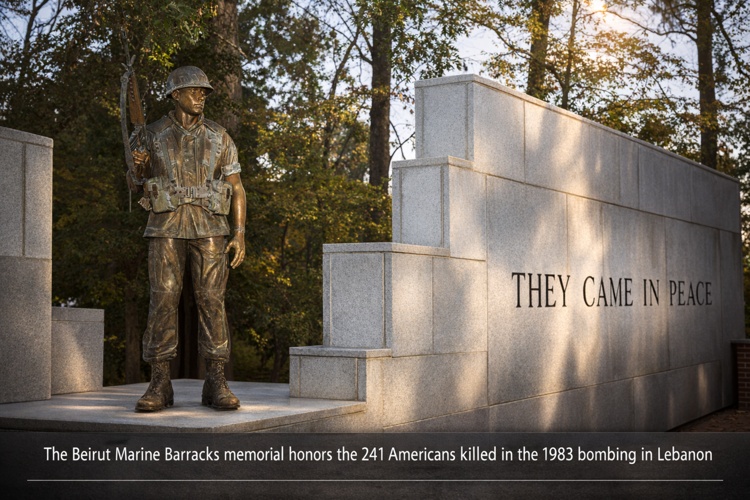
1983 – Beirut Marine Barracks Bombing
A truck bomb destroyed the U.S. Marine barracks in Beirut, killing 241 American service members. U.S. investigations and later federal court findings concluded that the attack was carried out by Hezbollah with Iranian support.
A bombing at the Khobar Towers housing complex in Saudi Arabia killed 19 U.S. Air Force personnel and wounded hundreds. U.S. prosecutors later charged members of Saudi Hezbollah and said elements of the Iranian government helped support the attack.
2003–2011 – Iraq War Proxy Attacks
During the Iraq War, the U.S. government attributed at least 603 American service member deaths to weapons, training, and operations connected to Iran’s Islamic Revolutionary Guard Corps and allied militias.
2016 – Detention of U.S. Navy Sailors
Iran’s Revolutionary Guard briefly detained 10 U.S. Navy sailors whose patrol boats entered Iranian territorial waters in the Persian Gulf. The sailors were released the same day, but the incident underscored the continuing tension between the two countries.
2021 – Kidnapping Plot Targeting a U.S. Resident
The U.S. Justice Department indicted four Iranian intelligence officials for a plot to kidnap Iranian-American journalist Masih Alinejad from her home in Brooklyn and transport her to Iran.
2022 – Murder-for-Hire Plot in New York
A man armed with a rifle was arrested outside Alinejad’s Brooklyn home after months of surveillance. Federal prosecutors tied the operation to Iranian networks and later secured convictions against members of the criminal group involved.
2022 – Plot Targeting Former U.S. National Security Adviser John Bolton
The Justice Department charged a member of Iran’s Islamic Revolutionary Guard Corps with attempting to hire a hitman to assassinate Bolton in retaliation for the 2020 killing of IRGC commander Qassem Soleimani.
2024 – Drone Attack on U.S. Base in Jordan
A drone strike by an Iran-backed militia on a U.S. outpost known as Tower 22 killed three American soldiers and wounded dozens more.
2024 – Foiled Assassination Conspiracy in the United States
Federal prosecutors charged a Pakistan-based operative with ties to Iran in a scheme to hire hitmen to kill U.S. officials or politicians inside the United States.
2025 – Allied Governments Condemn Iranian Operations
In July 2025, the United States and 13 allied governments issued a joint statement condemning Iranian intelligence services for attempts to “kill, kidnap, and harass” individuals across North America and Europe, including journalists, dissidents, and government officials.
The Nuclear Deal Context
The debate over Iran policy is also shaped by earlier political decisions in Washington.
In 2015, Congress reviewed the Iran nuclear agreement negotiated by the Obama administration. Sen. Bernie Sanders publicly announced that he would support the agreement, arguing that diplomacy offered a better path than another war in the Middle East.
Rep. Peter Welch likewise supported the deal at the time, arguing that it offered the best available mechanism for preventing Iran from developing a nuclear weapon.
The agreement lifted certain economic sanctions on Iran in exchange for restrictions and inspections on its nuclear program. While it did not involve Congress directly appropriating money to Iran, sanctions relief allowed Tehran to regain access to previously frozen financial assets.
The Policy Debate
None of these events automatically determines what U.S. policy toward Iran should be. The risks of escalation are real, and history offers many examples of military interventions producing unintended consequences.
But the historical record also shows that tensions between the United States and Iran did not begin with the current conflict or with Israel’s security concerns. They extend across more than four decades of confrontations that have included hostage-taking, attacks on U.S. forces, proxy warfare, and attempted assassinations.
Vermont’s congressional delegation has emphasized the dangers of another Middle Eastern war. The timeline above raises a different question: if military escalation is the wrong response, what alternative strategy effectively deters future attacks while avoiding a wider conflict?
That question remains unresolved, and it sits at the center of the current debate in Washington.
Dave Soulia | FYIVT
You can find FYIVT on YouTube | X(Twitter) | Facebook | Instagram
#fyivt #vermontpolitics #iranpolicy #nationalsecurity
Support Us for as Little as $5 – Get In The Fight!!
Make a Big Impact with $25/month—Become a Premium Supporter!
Join the Top Tier of Supporters with $50/month—Become a SUPER Supporter!


 Subscribe to RSS




Leave a Reply